2/16/2022
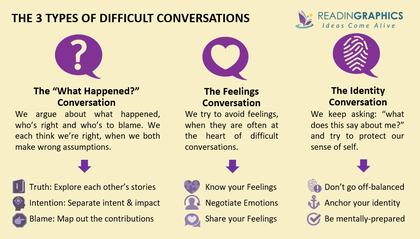
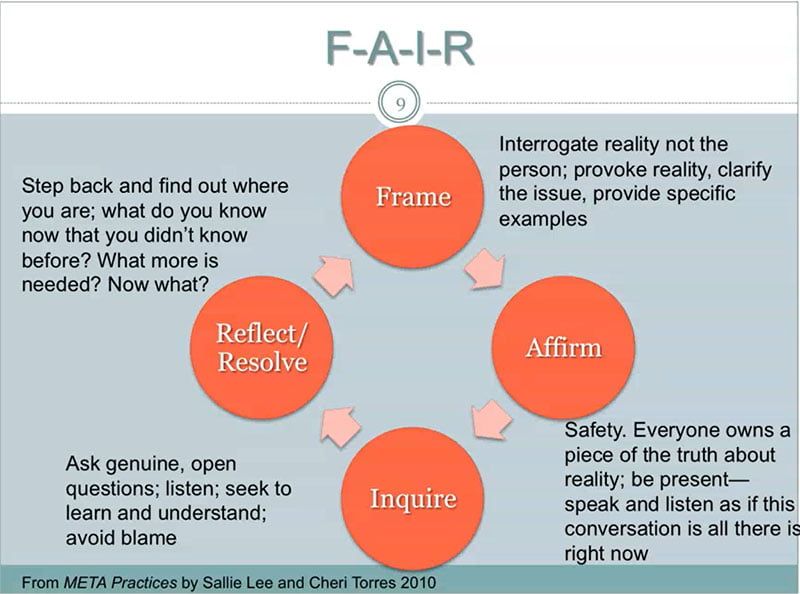
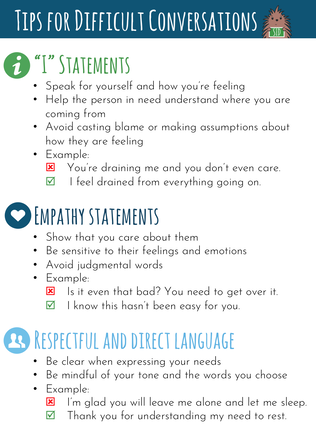
When it's time to have difficult conversations with other people, it can be difficult to know when and how to have them. The need to have difficult conversations can lead to avoiding the conversation altogether. Avoidance tends to lead to misunderstandings, passive aggressive communication, pent-up emotions, and many other negative results. When we learn how to be assertive and communicate healthily, we can tackle these tough conversations with empathy and honesty.
Difficult conversation examples include:
- Hurt feelings
- Break-ups or divorce
- Workplace mistakes or employee under-performance
- Death
- Talking about safe sex with your child
- Establishing boundaries
We may even give excuses for not wanting to have difficult conversations sometimes, like, lack of time or not the right time, fear of a negative reaction, fear of being disliked, or it's "easier" not to.
Below are some resources to help you or your students handle difficult conversations:
- 6 steps to help you tackle difficult conversations
- We Have to Talk: A Step-By-Step Checklist for Difficult Conversations
- Talking about tough topics with children 2-8 years old
- How to Handle Difficult Conversations at Work
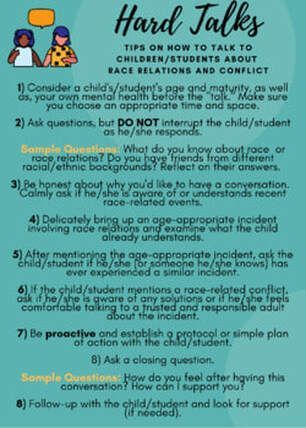
- How to Have a Respectful Conversation About Racial Justice
- Teaching Tolerance: Discussing Race, Racism, and Other Difficult Topics with Students
- 11 Difficult Things To Consider Saying To Your Partner For A Healthier Relationship
- Talking to Children about Death and Dying
0 Comments