9/28/2020
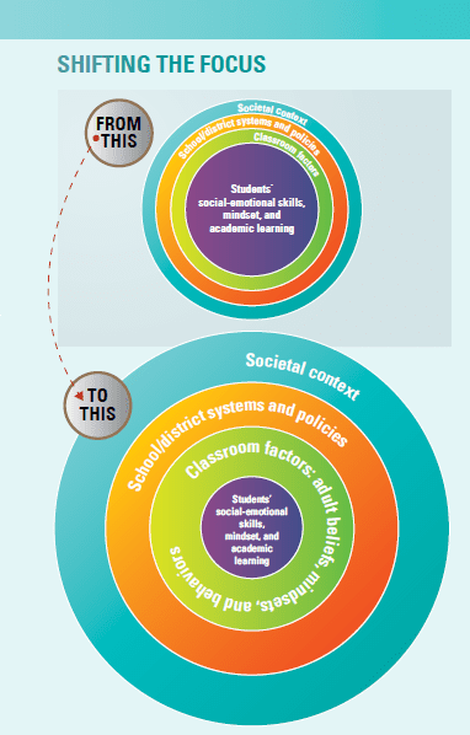
Building relationships and creating learning environments that support positive social and emotional growth is vital to supporting the social and emotional learning of students. The Education Trust provides a report on how to shift the focus away from "fixing kids" and toward addressing adult beliefs and mindsets as well as school and district policies to create an equitable learning environment.
"All of students’ experiences, including home life, bouts with racism, and cultural background, influence social, emotional, and academic development, and influence how adults perceive students’ competence in social-emotional skills and academics. All learning is social and emotional, whether intended to be or not and whether explicitly stated as so or not. The question is not whether educators and schools influence social-emotional development or not; they do. The issue is whether educators and schools do so in a way that is intentionally and explicitly equity focused, because not doing so may cause harm, especially to those students who may not fit the standard American norms that our current education system reflects and rewards." -
Education Trust, Section 2 of Social, Emotional, and Academic Development Through an Equity Lens, August 6, 2020.
In this report, there are 5 sections:
- Re-envisioning Social, Emotional, and Academic Development
- Social, Emotional, and Academic Development in Context: Why It Matters
- Focus Group Findings: How Students and Families of Color Approach Social, Emotional, and Academic Development
- Shifting the Focus: Moving Away from "Fixing Kids" to Creating an Equitable Learning Environment
- Where to Start: Action Items for Equitably Approaching Social, Emotional, and Academic Development
You can download the full report
here.
Here are six recommendations for school and district leaders to implement toward creating equitable learning environments:
- Provide meaningful professional development and supports
- Engage parents, students, and communities as full partners
- Diversify the workforce
- Ensure equitable access to and supports for success in rigorous and culturally sustaining coursework
- Develop inclusive discipline and dress code policies
- Provide access to integrated wraparound services and supports
0 Comments